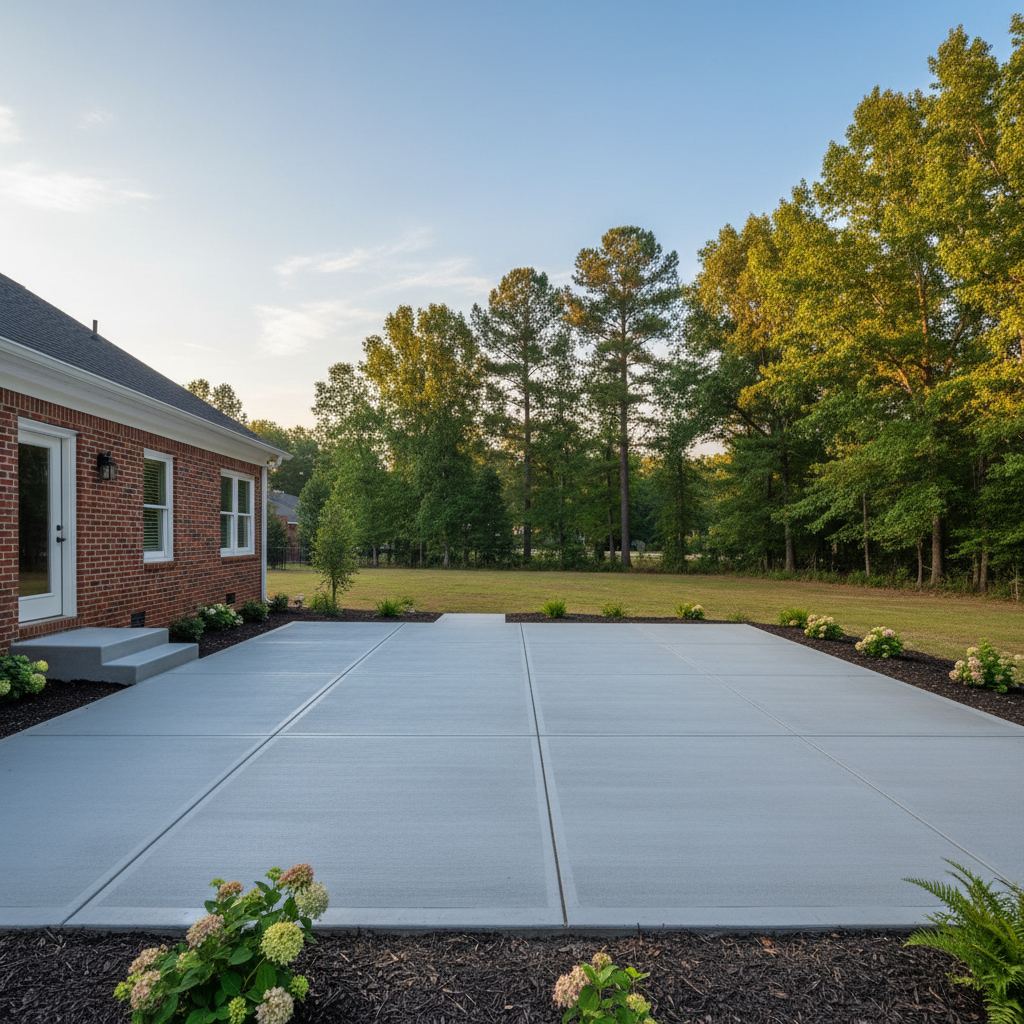
So, you're dreaming of a new concrete patio. Maybe it's for those summer cookouts, a nice spot for the kids to play, or just a quiet place to enjoy our Alabama evenings. That's great! A well-done concrete patio adds a ton of value and enjoyment to your home. But I've seen enough projects go sideways over the years to know that it's easy to make some pretty common mistakes when you're planning or hiring for one.
As someone who's poured a lot of concrete right here in Dothan, I want to share what I've learned. My goal isn't just to get you to call Vertex Concrete Constructions, though we'd be happy to help. It's to make sure you get a patio you'll love, without the headaches.
Mistake #1: Focusing Only on the Lowest Bid
This is probably the biggest one, and it's a trap a lot of folks fall into. I get it, everyone wants a good deal. But when it comes to concrete, the cheapest bid is very rarely the best one. Concrete work isn't like buying a gallon of milk; there's a huge difference in quality, expertise, and what goes into that price.
A low bid often means corners are being cut. Maybe they're using less rebar or wire mesh than they should, skimping on the base prep, or using cheaper, lower-strength concrete. Down here in Dothan, with our expansive clay soils, proper base preparation and reinforcement are absolutely critical. If you don't get that right, you're looking at cracks, sinking, and a whole lot of regret down the road. Ask for detailed quotes. What's included? What kind of concrete? What's their process for excavation and base material? If a bid is significantly lower than others, there's usually a reason, and it's rarely a good one for you.
Mistake #2: Not Checking References or Insurance
You wouldn't hire someone to babysit your kids without checking them out, right? The same goes for someone working on your biggest investment. It's shocking how many people just take a contractor's word for it. Always, always, always ask for references. And don't just look at online reviews – call those references and ask specific questions. Were they on time? Did they stick to the budget? Was the quality good? Did they clean up afterward?
And this is a big one: make sure they're properly insured. I'm talking about general liability insurance and workers' compensation. If a worker gets hurt on your property and the contractor isn't insured, guess who's liable? You are. It's a risk you absolutely don't want to take. Any reputable contractor, like us at Vertex Concrete Constructions, will be happy to provide proof of insurance.
Mistake #3: Ignoring Drainage and Site Prep
This goes hand-in-hand with the low bid issue. A concrete patio isn't just a slab of concrete; it's a system. Proper drainage is non-negotiable, especially with our heavy rains here in Southeast Alabama. You don't want water pooling on your patio, or worse, running back towards your house's foundation. A good contractor will assess your yard's grading and plan for proper slope and drainage away from your home.
Site preparation is another area where shortcuts happen. This includes excavating to the right depth, compacting the subgrade, and laying down a proper gravel base. If the ground isn't prepared correctly, your patio is doomed to fail. It'll crack, settle unevenly, and just generally look terrible in a few years. Don't let anyone convince you that you can just pour concrete directly onto dirt.
Mistake #4: Not Discussing Expansion Joints and Control Joints
Concrete expands and contracts with temperature changes. It's just what it does. If you don't plan for this movement, it's going to crack wherever it wants to. That's where expansion joints and control joints come in. Expansion joints go all the way through the slab and separate it from other structures, like your house foundation or an existing driveway. Control joints (often called saw cuts) are grooves cut into the surface that create weakened planes, encouraging any cracking to happen in a straight, controlled line where it's less noticeable.
A good contractor will have a plan for these joints, based on the size and shape of your patio. If they don't bring it up, or if they try to tell you it's not necessary, that's a huge red flag. You want those cracks to happen where you expect them, not randomly across your beautiful new surface.
Mistake #5: Rushing the Curing Process
After the concrete is poured, it needs time to cure properly. This isn't just about it