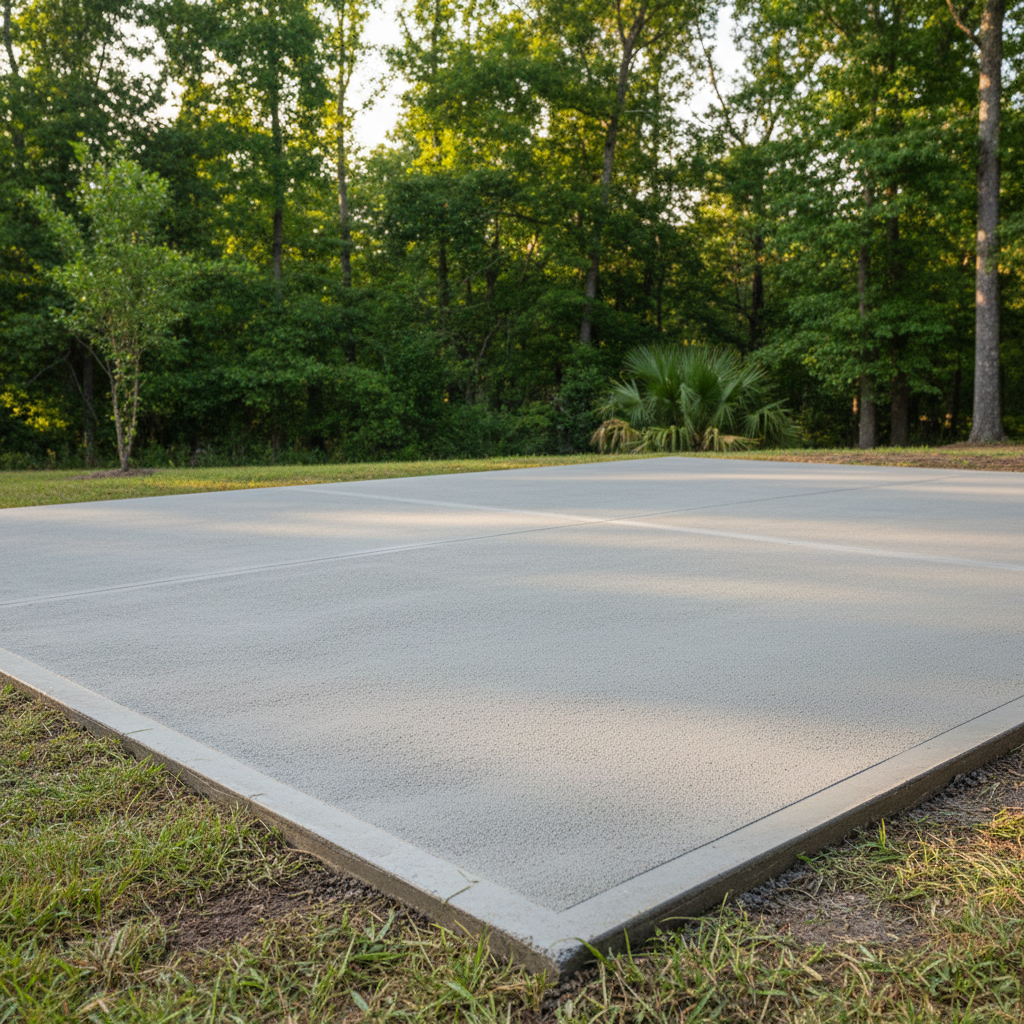
So, you're thinking about pouring some concrete around your place here in Dothan. Maybe it's a small pad for your AC unit, a little walkway, or even patching up some cracks in your driveway. That's great! There are definitely some concrete jobs you can tackle yourself, and then there are others where you really, really shouldn't. I've seen it all in my years doing this, and I want to give you the straight scoop.
Before You Even Think About Mixing
First things first, let's talk about what you're trying to do. A small, non-structural concrete pad, say 2x2 or 3x3 feet, for a garbage can or a small grill? Absolutely, you can probably handle that. A sidewalk, a patio, or anything that's going to bear significant weight or needs to look perfect? That's when you need to pump the brakes and consider calling a pro like us at Vertex Concrete Constructions.
Before any concrete goes down, you need to think about the site. Is it level? Does it drain well? Here in Dothan, we get our share of rain, especially during hurricane season, so proper drainage is crucial. You don't want water pooling up against your foundation or creating a swamp in your yard. You'll also need to excavate. For a small pad, a shovel is fine. For anything bigger, you might be looking at renting a bobcat or hiring someone to do the dirt work. And don't forget utilities! Call 811 before you dig, every single time. It's free, and it can save you a world of hurt (and expense) if you hit a gas line or electrical conduit.
You'll need forms. These are usually made from wood (2x4s or 2x6s) and they define the shape and height of your concrete. Make sure they're sturdy, level, and well-staked so they don't bow out when you pour. And think about your sub-base. For most small projects, a few inches of compacted gravel (like crusher run) will give you a good, stable foundation. This helps with drainage and prevents cracking down the road.
During the Pour: It's a Race Against Time
Okay, you've got your forms, your sub-base, and you're ready to mix. If you're doing a really small job, you can buy bags of ready-mix concrete. Just add water according to the instructions. Don't add too much water; that's a common mistake that weakens the concrete. You want it to be like thick oatmeal, not soup.
For anything larger than a few bags, you're going to need a concrete mixer. You can rent one from a local equipment rental place. Or, if it's a bigger job, you'll order a truck. If a truck is coming, you better have all your ducks in a row. Concrete waits for no one. You'll need a crew – even for a medium-sized DIY patio, you'll want at least two or three strong people to help you move and spread the concrete quickly.
Once the concrete is in the forms, you've got to spread it evenly and then 'screed' it. Screeding is basically dragging a straight edge (like a 2x4) across the top of the forms to level the concrete. Then you 'float' it with a bull float or hand float to bring the cream to the surface and smooth it out. This is where skill comes in. If you're not careful, you'll end up with an uneven, bumpy surface. For driveways or patios, we often add rebar or wire mesh for extra strength, especially with our expansive Dothan clay soils that can shift. This helps prevent cracking.
After the Pour: Patience is a Virtue
You've poured, you've floated, and now you wait. This is called 'curing,' and it's super important. Concrete doesn't just dry; it chemically hardens. For the first few days, you want to keep that concrete moist. You can do this by misting it with water regularly, covering it with plastic sheeting, or using a curing compound. This slows down the drying process and makes the concrete much stronger and more durable. If it dries out too fast, it'll crack. I usually recommend at least 7 days of curing, but 28 days is when it reaches its full strength.
Don't walk on it for at least 24 hours, and don't drive on it or put heavy weight on it for at least 7 days, preferably longer. Be patient! Removing the forms usually happens after 24-48 hours, depending on the temperature and how quickly the concrete is setting.
So, when do you call a pro? If your project is anything more than a small, non-critical slab, or if you're not completely confident in your ability to get it right, call us. We've got the equipment, the experience, and the crew to get it done right the first time. We know how to deal with the specific challenges of our local climate and soil conditions. A bad concrete job isn't just ugly; it can be a costly mistake to fix. Sometimes, saving a few bucks upfront ends up costing you way more down the line. We're always happy to give you an estimate and talk through your project.